03 / 03 · CDK Global
Overview
In the high-velocity sales environment of car dealerships, speed is everything — but that urgency has a cost. Car dealership salespeople were routinely creating new customer records without checking whether one already existed. The result: duplicate records piling up across the system, each one quietly fragmenting workflows, muddying reporting data, and creating real disputes over commission attribution.
The fix wasn't about discipline or training. It was about design. Customer Duplicate Prevention set out to build a check directly into the customer creation flow — friction in exactly the right place, at exactly the right moment, so salespeople encounter existing records before it's too late to matter.
The problem
The system made it easy to start fresh and offered no prompt to pause. In a fast-moving sales environment, that path of least resistance became the default — and duplicates accumulated silently across the database.
Effect 01
Customer history, notes, and activity were split across multiple records. Salespeople working a deal might be missing context living on a duplicate they didn't know existed.
Effect 02
When the same customer appeared under two records, it created genuine ambiguity about who owned the relationship — and who should be credited when a deal closed.
Effect 03
Duplicate records corrupted the data layer that reporting depended on. Customer counts, pipeline data, and trend analysis all became harder to trust.
My process
Key decision
The central design challenge wasn't whether to add friction — it was precisely where. Add it too early and you slow down legitimate new customer creation. Add it too late and the duplicate is already committed. Get the moment wrong and salespeople learn to click past it without reading it.
The question
Three candidate moments emerged from research. Each had genuine merits, and each carried tradeoffs around visibility, disruption, and the likelihood of the check being taken seriously.
The insight
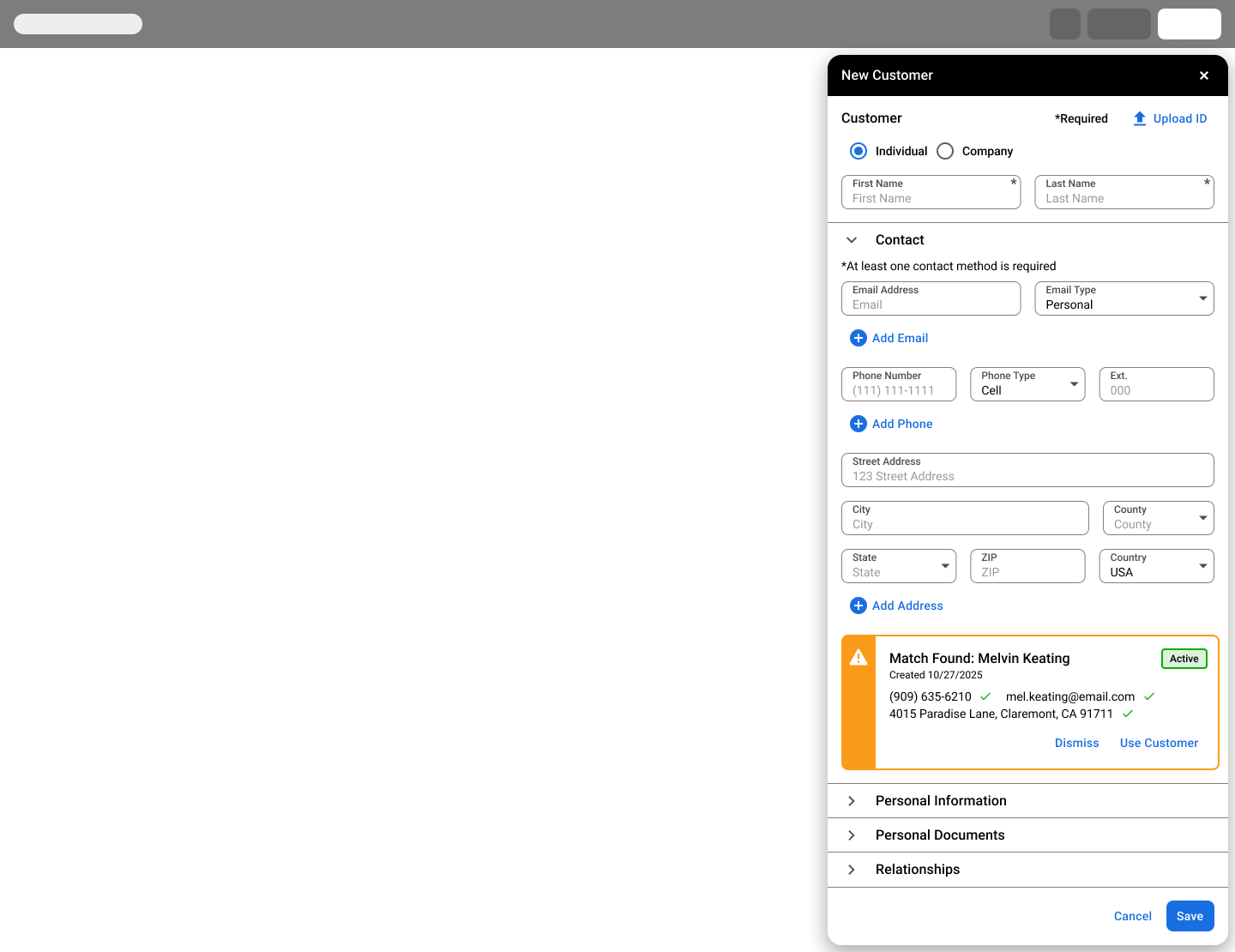
The right moment isn't the earliest possible — it's the earliest moment where a real match can be shown. A name alone isn't enough; but a name paired with an email, phone number, or address gives the system enough to be confident. At that point, if the customer already exists, the case for creating a duplicate collapses.
Design work
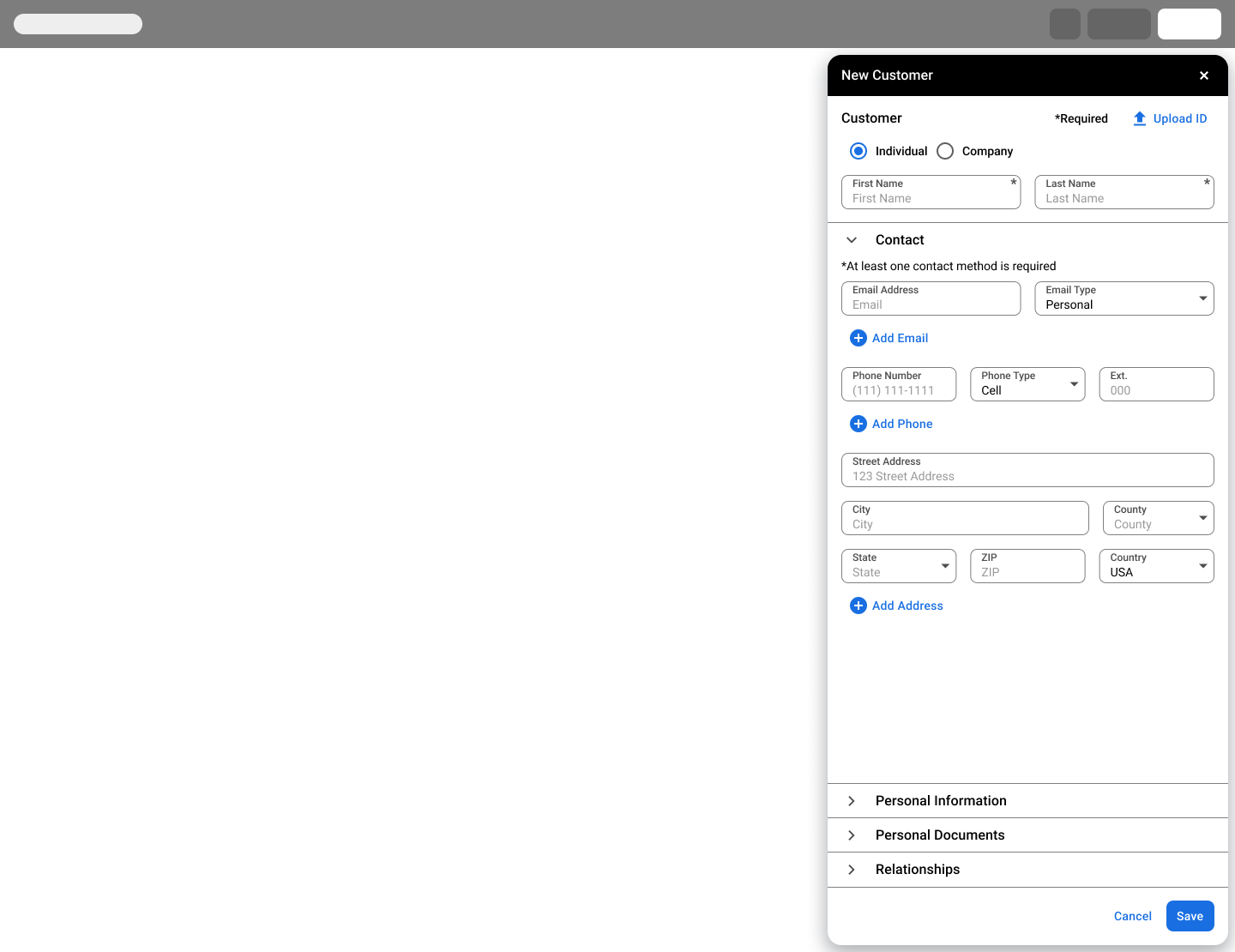
Customer creation
Simplified new customer form — streamlined fields to reduce friction and time to complete
Duplicate detection
Inline match notice surfaces a potential duplicate mid-flow — letting the salesperson act without leaving the form
Outcome
The redesigned customer creation flow shipped with a built-in check that surfaces matching records the moment a name is entered — before a duplicate can be committed. Salespeople now encounter existing customers at the exact point where redirecting them is still frictionless.
In progress
The project is not yet fully deployed across all environments. Once rollout is complete, the expectation is a meaningful reduction in the rate of duplicate record creation — removing the source of scattered workflows, contested commissions, and degraded reporting data.