02 / 03 · Elead CRM
Overview
Business Development Centers run on tasks — calls to make, leads to follow up, customers to reach. But Elead CRM's existing system had a fundamental flaw: agents chose their own work. That freedom sounds reasonable, until you realize what it actually meant in practice.
Easy tasks got done. Hard ones didn't. And nobody in management had any way to know the difference until it was too late. BDC Pro set out to fix both sides of that equation — building a structured, prioritized task experience for agents, and a real-time visibility layer for the managers who needed to lead them.
The problem
Problem 01 · Agent experience
The previous system gave agents full autonomy over their task queue. In theory, that sounds empowering. In practice, agents naturally gravitated toward quick, low-friction tasks — leaving complex follow-ups, difficult conversations, and high-priority leads perpetually at the bottom of the pile. Tasks weren't just delayed. They were forgotten entirely.
Problem 02 · Manager experience
Without any visibility layer, managers had no way to answer basic questions: Who's doing what? How much work is each agent handling? Are tasks getting done on time? Is anyone struggling? The system offered no dashboards, no alerts, no oversight — leaving leaders unable to coach, intervene, or even understand the health of their team in real time.
My process
Key decision
The most consequential design decision on this project wasn't about a UI pattern or a layout — it was about sequencing. Who gets designed for first?
Initial instinct
My first instinct was that managers were the higher-leverage starting point. They set direction, they have authority, and solving their visibility problem felt like the headline outcome of the project. Build the dashboard first, figure out the agent experience after.
Initial assumptionCorrect approach
Research told a different story. Manager visibility only becomes meaningful if agents are doing structured, trackable work in the first place. A dashboard that reflects chaotic, self-directed task selection is still useless. The agent experience had to come first — it was the foundation everything else depended on.
Research-driven decisionThe insight
Counter to my immediate instinct, agent needs had to go first. Manager visibility is only as good as the data feeding it — and that data only exists if agents are working within a structured system.
Design work
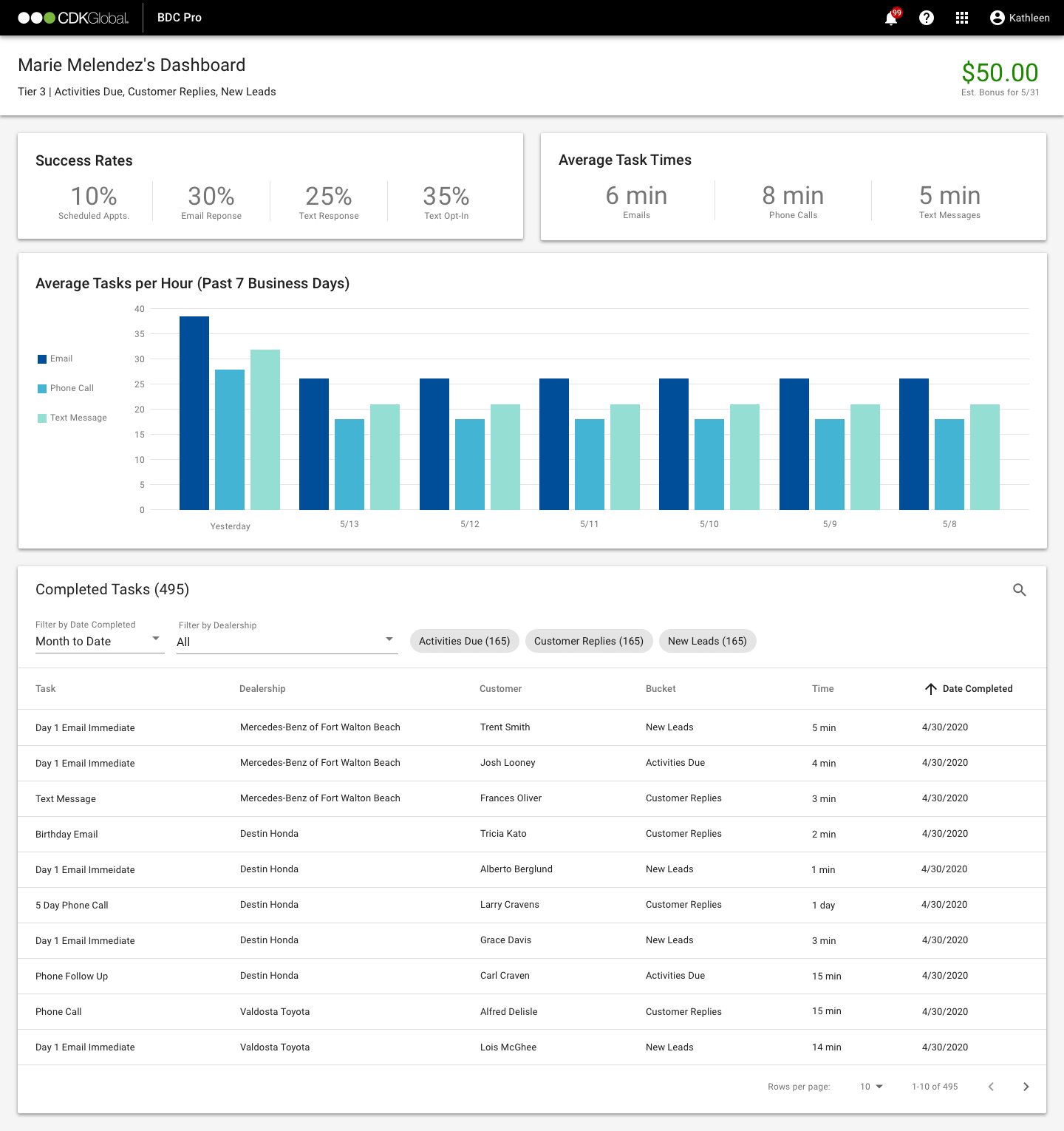
Agent dashboard
Performance metrics, task history, and bonus tracking — built around how agents actually measure their own progress
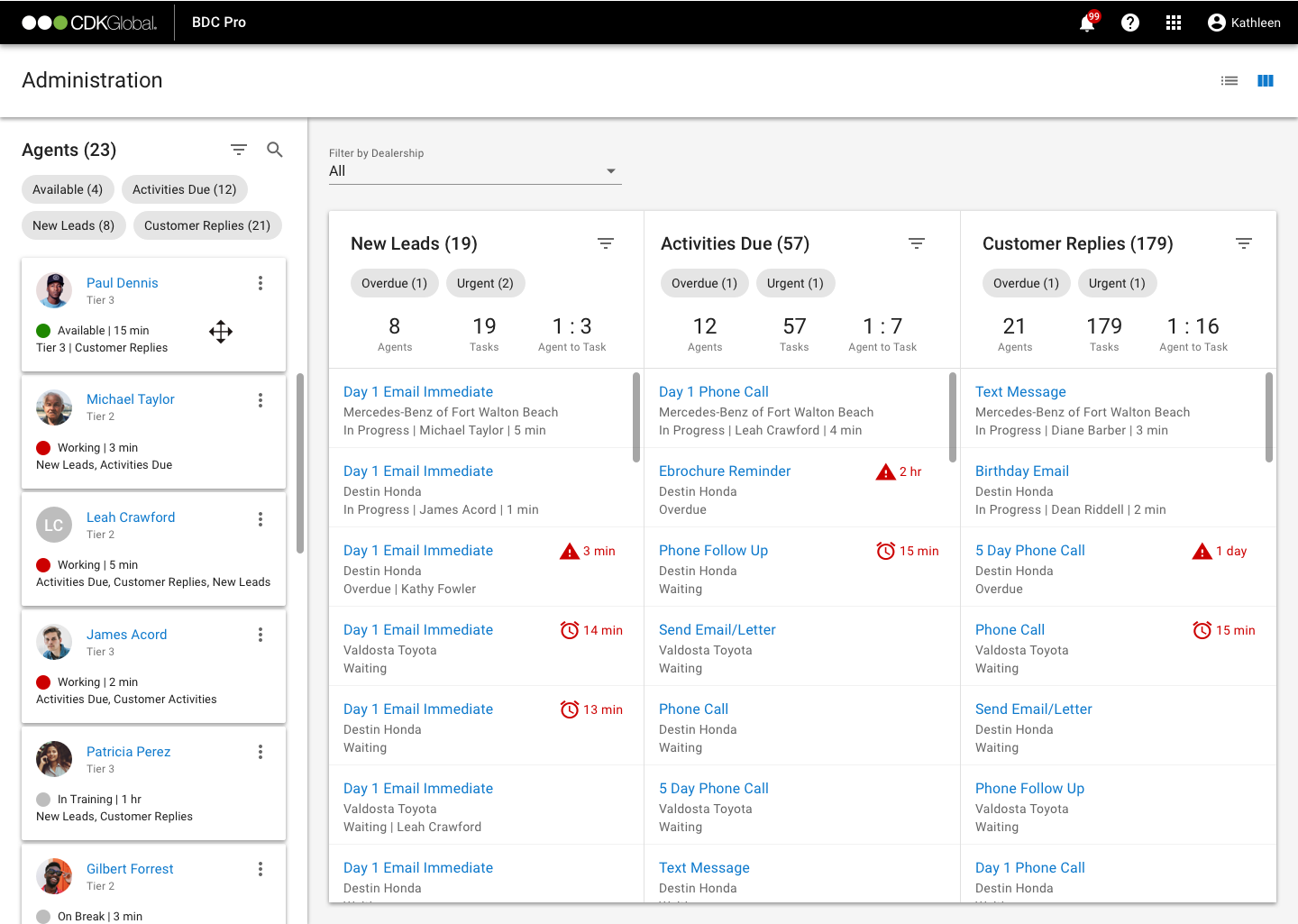
Manager dashboard
Real-time team visibility — agent status, task queues, and workload distribution across dealerships
Outcome
Both the agent and manager experiences shipped in full. The structured task queue replaced self-directed selection — agents now work through a prioritized list, so high-value tasks can no longer be quietly ignored. Overdue tasks, the defining pain point that kicked off this project, were eliminated.
Managers gained a visibility layer they'd never had: who's working, what they're working on, how much they're handling, and whether anything is at risk. That clarity enables the kind of coaching and intervention that wasn't possible before.